As lot of people keep asking me regarding the specific financial advice when entering a stock market, this quick-read article gives you some pointers before you jump into stock markets
Start Early
Start NOW
Best advice anyone can give to you is to Start Early and Early means NOW
Whether you are earning 5k/month or 5lac/month, you need to start asap.
Only when you start early, you can finish or reach your goal early
Finish early
Emergency Fund
Emergency fund is a lifeline
A must step!! Build an emergency fund equivalent to 3-6 months expenses
Understand the importance of emergency fund. There is no second thought about it.
Always maintain the emergency fund and review it on yearly basis.
Apart from home loan, there should not be any debt.
Clear off your credit card debts, gold loans, car loans.
Establish a household budget
Maintain an elaborate budget with expenses under different heads
Don’t run away from noting down every single expense ( every rupee for that matter)
Keep %age of money for stock market investment and %age of money for other asset classes
Follow Save first, spend later approach.
Follow Goal based investing
Split your saving across different and appropriate set of investments
Park your money in Fixed deposits, Recurring deposits, liquid funds, debt funds, gold.
Start investing in Stocks and mutual funds when you are done with above steps
Goal Based Investing
In case you have any questions/ queries, please feel free to reach me through Contact Form
Do spread the word among your peers, family members or anyone who can benefit from this blog and asked them to subscribe. But be selfish and take care of yourself first by subscribing before they do.
Enjoy the day and your life. Don’t forget, we are alone in this grand universe and may not get a chance to live again.
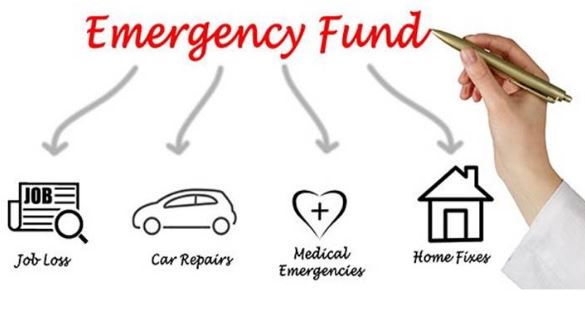
Emergency fund is money which comes to your rescue when something unexpected pops up in our daily routine. One needs an emergency fund as life is very unpredictable. Something that can go wrong will eventually go wrong at wrong time.
Just think of emergency fund as a lifeline thrown at you when you are drowning and this article is about creating that lifeline yourself
Treat emergency fund as a Lifeline
One may need to travel unexpectedly (we all know how much bomb a ticket costs at last minute) or there could be medical emergency (Generally Life insurance or medical insurance will work for this but by the time insurance claim comes to you, you need to survive yourself and family and pay hospital bills) You need funds for that.
Or worse if you are working in an industry where jobs are not secure and layoffs are frequent, such a fund becomes mandatory.
You wouldn’t be forced to reach out to family or your so called friends for help and further You also wouldn’t have to accept the first job offer that lands on your plate in such a scenario
Need of emergency fund
How much to keep aside for emergency funds
Basic Thumb rule is to have minimum of 3 months and maximum of 12 months of expenses as your emergency funds. e.g, if your monthly income is Rs. 50000 and you spend Rs 45000 month on an average and save 5000 Rs per month then you should have minimum 45000*3 =135000 as your emergency fund.
Minimum of 3 month expenses in highly liquid form (365*24*7)
Minimum of 3 month expenses in fast-accessible liquid form (T+1 days)
Approximate 3 month expenses in easily accessible liquid form (T+3 days)
Approximate 3 month expenses to be put aside in somewhat inaccessible liquid form e.g. 9 month fixed deposit or 1 year fixed deposit
Best way to calculate emergency fund
Monthly Expenses should cover Home EMI, personal loans, car loan installments, household expenses, school fees, grocery bills, phone bills, personal grooming expenses etc.
Best way to arrive at monthly expenditure is to divide yearly expenditure by 12. This is only possible if you know your yearly expenditure by having household budget and maintain every single expense in that.
Second best way is to add all major expenses in a year and divide by 10 (instead of 12) to arrive at approximate monthly expense.
To hedge against inflation, multiply this emergency fund by 1.1 to arrive at real number assuming a 10% inflation in education, travel & medical fields
Review of emergency funds
Review it on yearly basis
Keep adding some money to emergency fund based on increased expenses
Adjust for inflation and add funds accordingly
Foresee any emergency in next few months and add funds
Where to keep emergency funds and accessibility time
Asset
%age of emergency fund
Storage mode
How to access
Accessibility days
Cash
15 %
Safe vault at home
Direct
365*24*7
Liquid Bank Balance
50%
FD/RD/Saving account
Cheque/NEFT/ IMPS/UPI
365*24*7 to T+(1 to 2) working days
Debt Mutual Funds
30%
Ultra short duration funds, liquid funds
Demat account/ Cheque/ NEFT
T+(1 to 2) working days
Gold
not more than 5-10%
Safe vault at home
Sell to Jeweler
Jeweler working hours
Other avenues which can be used
How much % to use in case of emergency
How to use
Advantage
Disadvantage
Credit card
25%
Make a habit to not cross 75% of allocated limit. Reserve 25% of credit card limit as emergency fund usage
It will give you 20-40 days to arrange funds from other resources.
Debt trap
Real estate
Neither recommended nor preferred
Additional plot/flat can be used to serve this purpose
Huge amount will be available
Highly illiquid. May be sold at high discount to market in emergency and may take months
Stocks/ equity Mutual funds
Neither recommended nor preferred
Sell in market
Emergency funds may grow faster
May be sold at high discount to market in emergency. T+3 working days to access funds
Emergency funds : Different assets and modes to access
You can safely assume the emergency fund as gateway to wealth creation. Until you pass this gateway, dont dare to think of entering stock market.
The point i want to bring to your attention is — if you have build up emergency fund and saved enough money further (approximate 2 year expenses) in bank account then such a huge money can give you access to new opportunities in stock market.
Let’s say the economy crashes and potential layoff’s are round the corner and eventually stock market crashes and asset prices are below their intrinsic values. In such a scenario, instead of selling your stocks at penny prices, you would have enough disposable money to take advantage of stock market and build up new positions without fear.
Do keep in mind that Stock market is a risky place and there could be times where the market is down for quite a long time and you do not want to sell your securities at highly discounted rate, this kind of emergency fund may help you to pass through such bad times without worrying about any unforeseen risks in your daily life.
Last but not the least You need to have more than few of the personal qualities to succeed e.g.
Always maintain the emergency fund and review it on yearly basis.
Increase the emergency fund every year
You have willingness to admit to mistakes and flexible to change your views.
You do not panic frequently at home/office
You can deal with uncertainty with ease
You have disciplined approach and follow process instead of gut feelings in decision making
You are self reliant and willing to do an independent research
In case you have any questions/ queries, please feel free to reach me through Contact Form
Do spread the word among your peers, family members or anyone who can benefit from this blog and asked them to subscribe. But be selfish and take care of yourself first by subscribing before they do.
Enjoy the day and your life. Don’t forget, we are alone in this grand universe and may not get a chance to live again.



 ALPHA AFFAIRS